November 3, 2026
Losing several teeth can change everyday routines, from eating certain foods to speaking comfortably. Some people also notice changes in how their smile looks, while others are more concerned about protecting the teeth they still have. There is no single replacement approach that suits every patient. The location of the gaps, the condition of the gums and jawbone, personal preferences, and budget all shape the available choices.
According to Forbes, about 6% of Americans have dental implants. Although tooth implants are one option for replacing multiple missing teeth, bridges and dentures may also be appropriate. Understanding how each treatment works can help patients prepare for an evaluation and make informed decisions with a dental professional. An initial visit can focus on learning about the options without committing to a procedure.
Understanding How Missing Teeth Affect Oral Health
Missing teeth can affect more than appearance. Depending on where the gaps are located, chewing may become less comfortable, and certain sounds may be harder to pronounce. Nearby teeth can shift or tilt into an open space over time, potentially changing how the upper and lower teeth come together. The extent of these changes varies from person to person.
The jawbone also changes after a tooth is lost because it no longer receives the same stimulation from that tooth's root. Bone loss may influence the options available for future treatment, but its progression depends on several factors. A dental examination can help distinguish changes caused by missing teeth from unrelated concerns, including gum disease or worn restorations.
Patients may have practical or emotional reasons for seeking replacement. Some want to enjoy a wider variety of foods; others would simply like fewer gaps when smiling. These are all reasonable concerns. Discussing personal priorities gives the dentist a clearer understanding of what successful treatment would mean for the individual.
Comparing Options for Replacing Multiple Teeth
Tooth implants are one option for replacing several missing teeth, but the best approach depends on the number and location of the gaps. A conventional fixed bridge relies on neighboring teeth, while an implant-supported bridge uses implants for support. A removable partial denture can replace teeth in different locations; a complete denture may be considered when an entire arch has no natural teeth.
Rather than placing an implant for every missing tooth, a dentist may recommend strategically positioned implants to support a bridge or denture. The design depends on anatomy, the number of missing teeth, and the anticipated biting forces. Implants are not automatically the preferred option for everyone, especially when surgery or an extended treatment timeline is a concern.
During a consultation, ask how each choice affects nearby teeth, daily cleaning, comfort, repair needs, and future maintenance. Comparing these details is more useful than assuming that the option with the highest initial cost will necessarily offer the best outcome.
Evaluating Candidacy for Implant Treatment
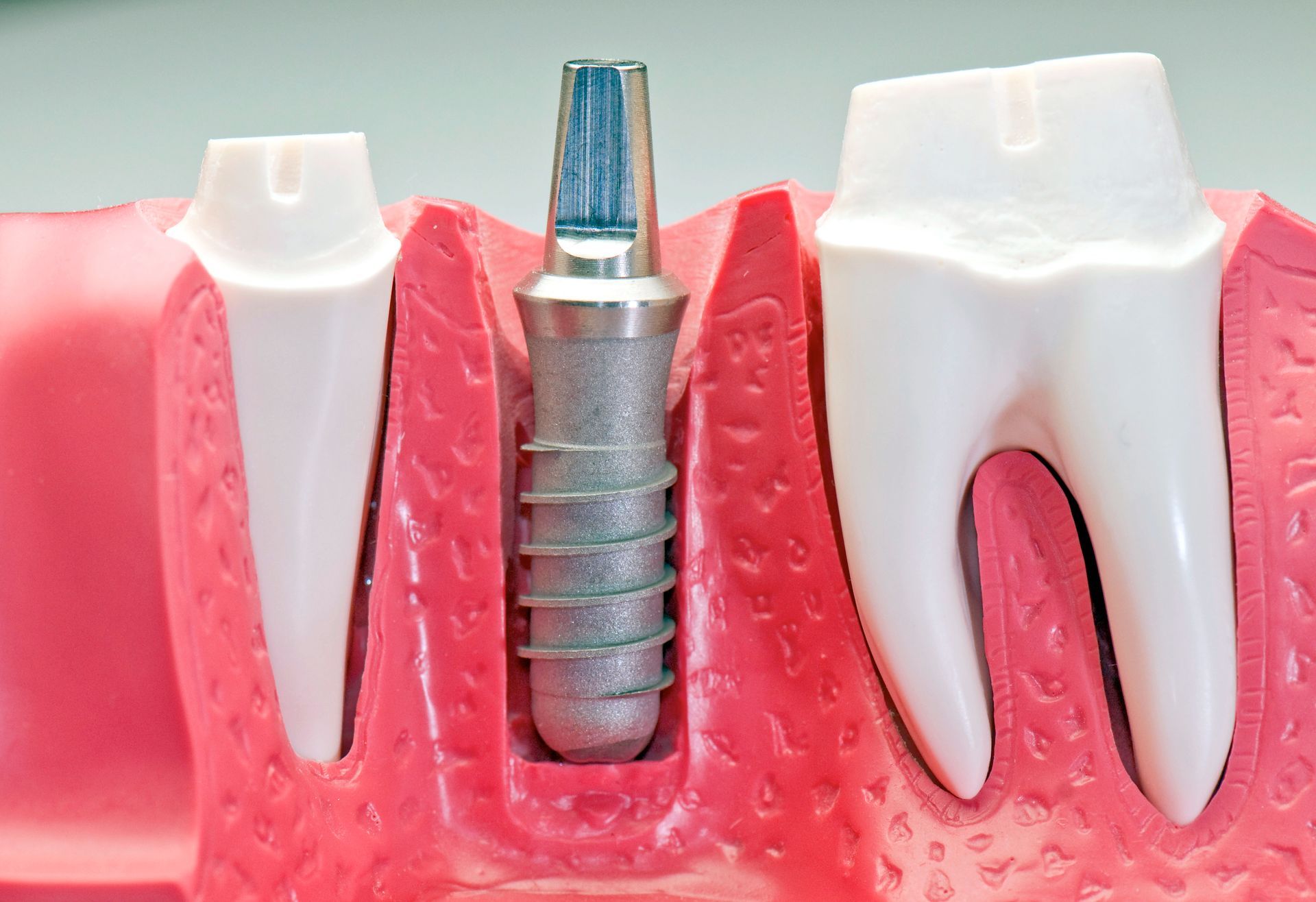
For patients considering tooth implants, each implant is a small fixture placed surgically in the jawbone to support a replacement tooth or another dental restoration. Before recommending treatment, a clinician assesses oral health, the amount and location of available bone, and the condition of surrounding tissues. Dental imaging may be needed to evaluate important structures and plan safe placement.
Active gum disease, certain medical conditions, medications, and tobacco use can affect treatment planning or healing. These factors do not always rule out implants, but they deserve an honest discussion. Some patients need periodontal treatment, tooth extraction, or bone grafting before placement; others may be better served by a different restoration.
Patients considering implant treatment should ask who will perform the surgical and restorative stages, whether specialist referrals are expected, and what alternatives remain available. A detailed evaluation cannot guarantee success, but it helps establish a realistic plan based on individual circumstances instead of a one-size-fits-all promise.
Preparing for Treatment and Recovery
Replacing several teeth may involve more than one appointment. The process often begins with an examination, imaging, a review of the treatment options, and an explanation of anticipated costs. If the patient chooses implants, any necessary preparatory procedures are considered before the placement date. Temporary teeth may be possible during healing, depending on the treatment plan. Ask whether a temporary appliance would be fixed or removable.
After tooth implants are placed, the surrounding bone typically needs time to heal and integrate with them. This can take several months, although timing varies considerably with bone quality, the number of procedures, and overall health. Once the implants are ready, the dentist can proceed with the planned bridge, crown, or denture attachment. Not every patient follows the same sequence.
Before treatment, ask about anesthesia, expected discomfort, eating restrictions, time away from work, and symptoms that require a call to the office. Following postoperative instructions is especially important for people receiving implants, since early healing affects the stability of the planned restoration. Persistent bleeding, increasing swelling, fever, or worsening pain warrants prompt professional advice.
Understanding How Bridges and Dentures Differ
Dental bridges and dentures remain useful choices for people replacing multiple teeth. A conventional fixed bridge generally uses prepared neighboring teeth as anchors, which means those teeth may need to be reshaped. An implant-supported bridge uses implants instead of relying entirely on adjacent natural teeth. Whether either design is suitable depends on the location of the gap and the health of the supporting structures.
Partial dentures are removable appliances that replace missing teeth while fitting around remaining teeth. Full dentures replace a complete upper or lower arch. They may offer a nonsurgical route to restoring appearance and some chewing function, but patients should expect an adjustment period. Unlike tooth implants, conventional dentures rest on the gums rather than anchoring in the jawbone. Fit can change as the gums and underlying bone change, making periodic adjustments or relining necessary. Ask whether a denture could be adjusted if additional teeth are lost later.
Patients weighing dentures against implant-supported restorations may want to discuss stability during meals, speech adaptation, cleaning routines, and how easily a restoration can be repaired or modified. Neither method recreates natural teeth exactly. The best choice is the one whose benefits, limitations, and upkeep match the patient's health and preferences.
Planning for Costs and Long-Term Care
Treatment expenses depend on the number of teeth being replaced, the type of restoration, any preliminary procedures, and the professionals involved. An estimate should explain whether examinations, imaging, extractions, surgery, temporary appliances, final restorations, and follow-up visits are included. Patients can also ask what could change the total and when payments would be due.
Insurance benefits vary widely. Some plans contribute to certain restorative services while limiting or excluding other parts of treatment. Patients should review their own policy and ask the dental office how estimates and claims are handled. Financing should never be assumed to be available without confirmation.
All replacement options require ongoing attention. Natural teeth and gums still need brushing, flossing, and regular examinations; bridges may require special cleaning tools, and removable dentures need appropriate cleaning and fit checks.
Tooth implants also need careful home care and professional monitoring because inflammation around an implant can threaten its supporting tissues.
Replacing several missing teeth is a personal decision that benefits from clear information and realistic expectations. McDaniel Family Dental can be contacted to discuss available services, evaluation needs, and possible next steps. A conversation about oral health, treatment timing, and daily priorities can help patients choose an approach that fits their circumstances.